Running Lead for Dogs UK: Best Options for Jogging With Your Dog
Running with your dog is a great way exercise and bond together. Your dog gets a proper workout, you get a running partner that is always ready to go, and the habit of running together tends to stick better than solo training. The right lead makes the difference between a run that flows and one where you are constantly managing the lead, adjusting your stride, or dealing with sudden lunges.
Browse our dog running leads collection to see the full EzyDog range, or read on for a practical guide to choosing the right running lead for how you run and who you run with.
What Makes a Running Lead Different From an Everyday Lead
A standard lead is great for walking pace. At running pace, the demands on both the lead and the handler change.
Shock absorption matters more.
When a dog lunges forward, slows down, or changes direction at pace, the force can jolt your arm and shoulder, risking injury to both you and your dog.
A bungee section built into the lead absorbs that impact before it reaches you, which makes the run more comfortable and reduces strain on both your shoulder and your dog's attachment point.
Lead handling changes when you are running.
At walking pace, keeping a lead in one hand is manageable. At running pace, a lead in one hand affects your arm swing, your posture, and your stride balance. The natural solution is hands-free, a lead that attaches at the waist rather than the hand, which restores full arm movement and lets you run with proper form.
Lead length needs to suit a running pace.
A standard 1.2m everyday lead is fine for pavement walking. For running, particularly on trails or quieter paths, a slightly longer lead gives your dog more natural movement alongside you without pulling tight every few strides.
The Road Runner Lead's 210cm total length gives enough room for comfortable side-by-side running while the waist attachment keeps the effective running distance consistent.
One-handed control needs to be instant.
In a running scenario, situations where you need to bring the dog in close such as a road crossing, a cyclist approaching, a narrow section of path, which happen faster than they do on a walk.
A traffic control handle positioned near the clip end of the lead gives you an immediate close-control grip without needing to reel in slack from the waist belt.

Hands-Free Running Leads: How They Work
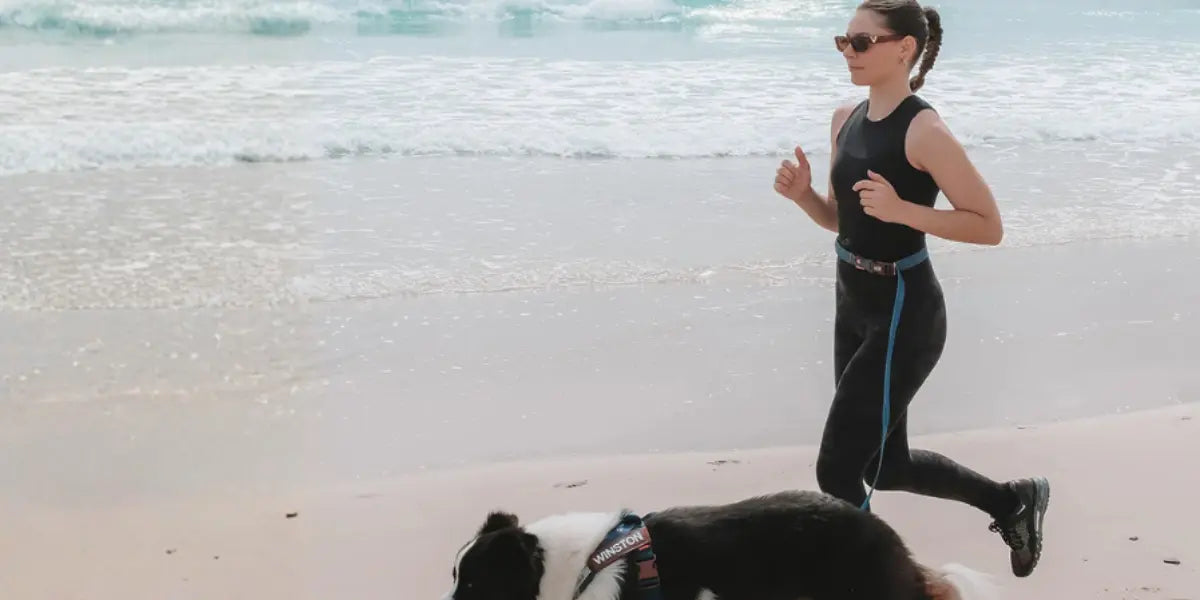
A Zero Shock hands-free running lead attaches to your waist rather than your hand. The lead runs from a waist belt or a loop worn around the hips, through the Zero Shock bungee section, and down to the dog's harness clip.
This does three things. First, it frees both hands for natural running arm movement. Second, it centres the connection point at your hips rather than your hand, which gives a more stable contact with the dog's movement and reduces the rotational pull on your shoulder. Third, the bungee section between the waist belt and the clip absorbs the rhythmic back-and-forth tension that comes from running alongside a dog at pace.
The trade-off with a waist-attached lead is reduced instant control compared to a hand-held lead. This is why every hands-free running lead worth using also has a traffic handle which is a short grip loop near the clip that you can grab in a split second without fumbling with the waist attachment.
For most running situations on paths, parks, and quieter roads, the waist connection is fine. For busier environments, the traffic handle covers the moments where close control is needed quickly.
EzyDog Running Leads
1. Road Runner Lead: Designed for life on the go
The Road Runner Lead is EzyDog's dedicated running lead and the one we recommend for most UK runners. At 210cm it is long enough to give a dog natural running space alongside you, and the sliding buckle at the handle end converts it from a standard hand-held lead to a hands-free waist lead in a few seconds.

The conversion is straightforward. Unclip the buckle from the handle, thread the webbing around your waist, and clip it back to itself. The lead now runs from your waist down through the bungee section to the dog's clip.
When you want to switch back to hand-held at a busy road crossing, at Parkrun, or in any environment where you want direct hand control, you reverse the process just as quickly.
Zero Shock bungee:
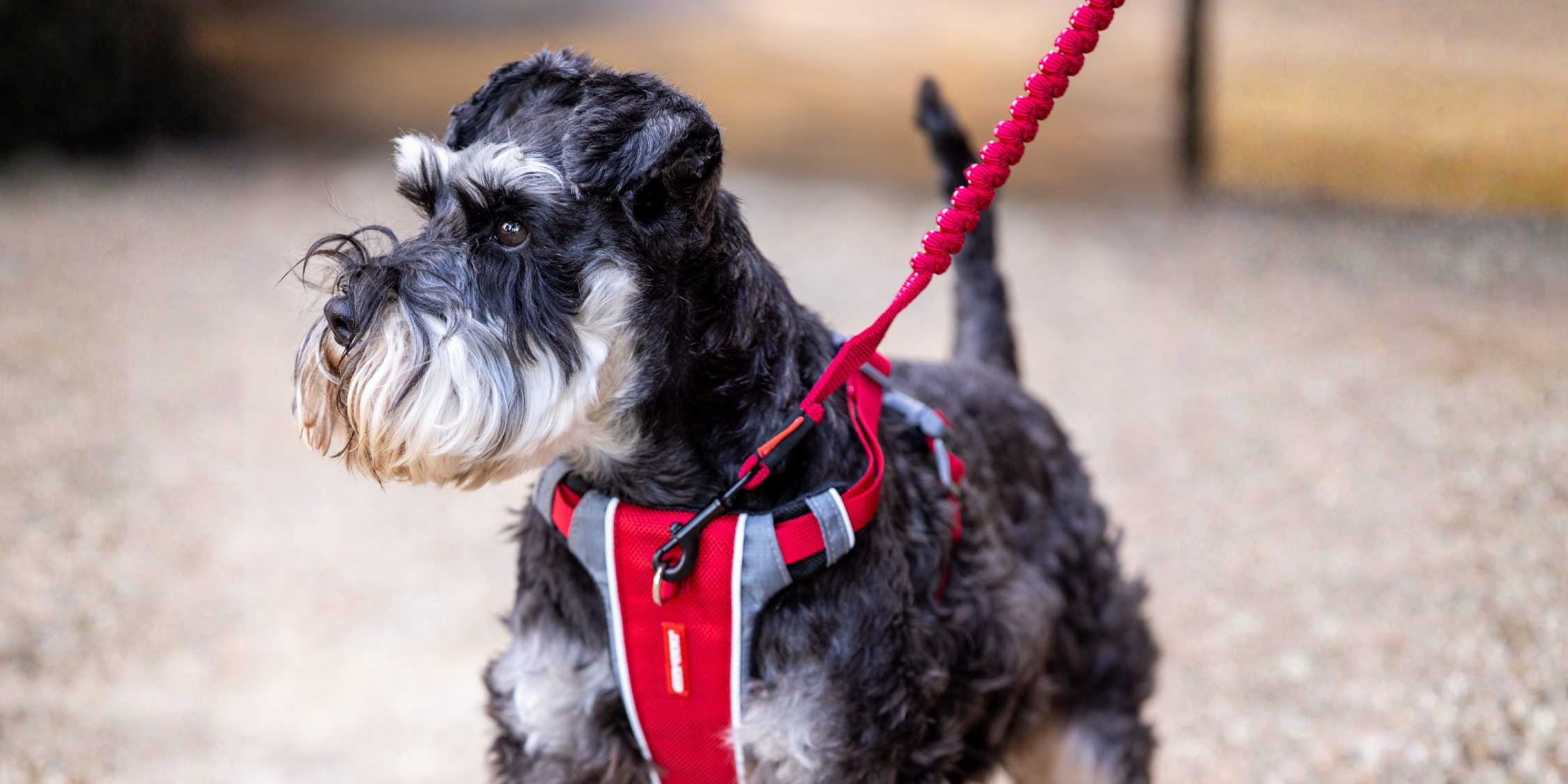
The bungee section sits in the middle of the lead. It absorbs the jolt of a sudden surge, a change of direction, or the rhythmic tension changes that happen naturally when running alongside a dog. The result is a noticeably smoother run, particularly over longer distances where cumulative shoulder strain becomes a factor without shock absorption.
Neoprene-lined handle:
The padded handle is comfortable to hold for the hand-held portion of any run and doubles as a grip point for the waist strap when worn hands-free. The neoprene construction handles sweat and rain well.
Traffic control handle:
A short secondary handle sits near the clip end of the lead. In the hands-free configuration, reaching down and grabbing this handle brings the dog in tight instantly, no adjustments to the waist belt needed. This is the key safety feature for running in environments where a sudden close-control moment is possible.
Two versions (Standard and LITE):
The Standard Road Runner suits medium to large dogs. The LITE version uses a lighter webbing construction designed specifically for dogs under 12kg, which keeps the lead proportionate to a smaller dog's weight without reducing any of the functional features. The LITE starts from £29.00 against the Standard's £41.50.
The Road Runner has 95 reviews at 4.9 stars. Owners regularly note how much the waist attachment changes the experience of running with a dog, the ability to use both arms properly makes a meaningful difference to comfort on longer runs.
Best for:
Most UK runners jogging with their dog on paths, parks, canal towpaths, and quieter roads. Parkrun participants. Runners who want hands-free operation with the option to switch back to hand-held quickly.
2. Zero-Shock Handy Lead
The Zero-Shock Handy Lead is a shorter bungee lead designed for close-contact running. Rather than a waist attachment, it uses a glove-style handle that distributes the force of a sudden pull across the whole hand rather than concentrating it on the fingers.

For runners with larger or stronger dogs, particularly those that lunge at pace, where the handle design makes the lead more secure under pressure. The bungee section absorbs the jolt of a surge without passing it directly to the wrist.
This suits runners who prefer a hand-held lead and prioritise grip security over hands-free operation, or who run in environments busy enough that keeping the lead in hand throughout is the more appropriate choice.
Best for:
Larger and stronger dogs. Runners who prefer a hand-held lead with impact absorption and a secure grip. Urban running environments where close control throughout the run is preferred.
Running Lead vs Collar: Always Use a Harness for Running
This deserves its own section because it is one of the most common mistakes UK dog runners make.
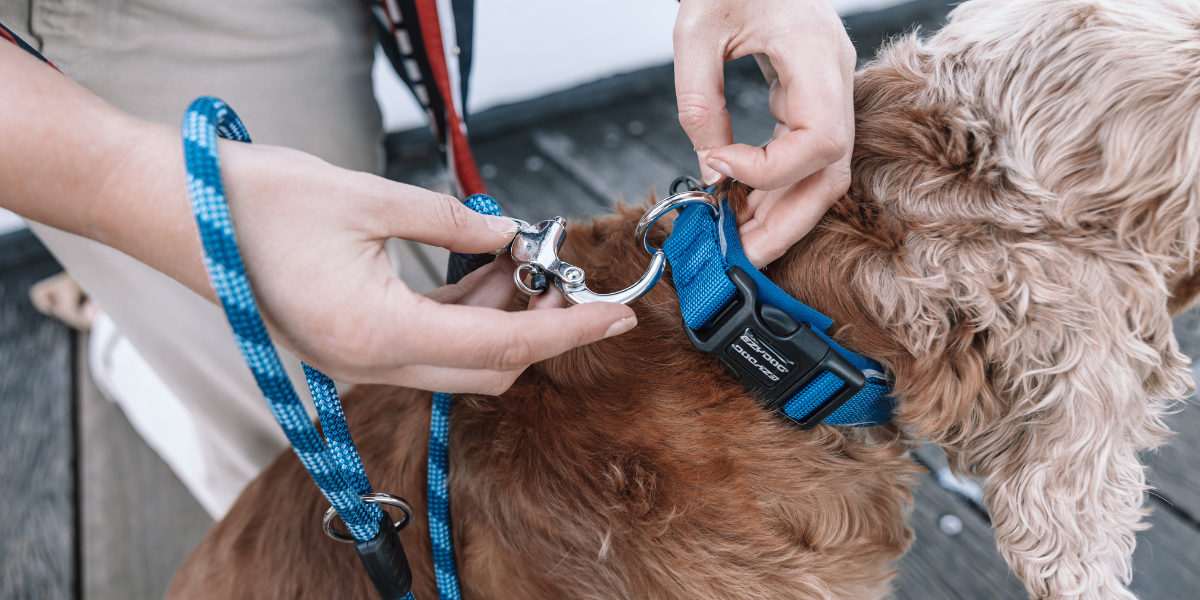
Attaching a running lead to a collar is a genuine risk. At running pace, the forces involved when a dog lunges or changes direction are significantly higher than at walking pace. A collar concentrates all of that force at a narrow band around the neck.
For brachycephalic breeds such as French Bulldogs, Pugs, Bulldogs, and similar, the risk of tracheal and throat injury from collar-attached running is particularly high. For all breeds, sustained collar-based lead attachment during running is harder on the neck than most owners realise.
The correct setup for running with a dog is a lead attached to a well-fitted harness. A harness distributes the force of any pull or lunge across the chest and shoulders rather than concentrating it at the neck. For running specifically, look for a harness that does not restrict the natural forward swing of the front legs, a Y-shaped front that sits above the shoulder joint rather than across it.
The Express Harness is the harness recommended on the running leads collection page for exactly this reason, and its ergonomic design allows full shoulder movement during an active stride.

Browse the full dog harnesses collection if you are building a complete running setup from scratch.
Running With Your Dog at Parkrun
Parkrun is one of the most popular running events in the UK, and dogs are welcome at the majority of events on a lead. A few practical points worth knowing before you run with your dog.
Start near the back of the field. Your dog will be distracted by the crowd, other dogs, and the general excitement at the start. Beginning further back gives everyone more space and reduces the number of situations where close lead management is needed at pace.
Keep your dog to one side consistently throughout the run. Switching sides mid-run increases the risk of the lead crossing another runner's path. Pick a side before the start and stick to it.
The Road Runner's traffic control handle and rubberised grab-handle are particularly useful at Parkrun finish funnels, at water stations, and when overtaking or being overtaken. Being able to bring the dog in close instantly without adjusting the waist belt is a practical advantage in a group running context.
Frequently Asked Questions
What is the best hands-free running lead for dogs in the UK?
The Road Runner Lead is the option we recommend. The sliding buckle converts it from a standard hand-held lead to a hands-free waist lead in seconds, the Zero Shock bungee absorbs impact during the run, and the traffic control handle gives instant close control when needed. It is available in Standard for medium to large dogs and LITE for dogs under 12kg.
Should I use a collar or harness when running with my dog?
Always a harness. At running pace, a collar concentrates the force of any lunge or direction change at the neck. A harness distributes that force across the chest and shoulders, which is significantly safer for sustained running. Look for a harness with a Y-shaped front that does not restrict the forward swing of the front legs.
Can I use any lead for running with my dog?
A standard flat lead is workable but not ideal for sustained running. Without shock absorption, every jolt from the dog transmits directly to your hand and shoulder. Without hands-free capability, your arm swing is restricted throughout the run. A dedicated running lead with bungee absorption and waist attachment makes a meaningful difference to comfort on runs over 20 minutes.
What age can a dog start running with me?
Most vets advise waiting until growth plates are closed, typically 12 to 18 months for most breeds, up to 24 months for larger breeds. Start with short, easy jogs on soft surfaces and build distance gradually rather than jumping straight into full runs.
Is the Road Runner Lead suitable for large dogs?
The Standard Road Runner suits medium to large dogs. For very large or powerful breeds where a stronger grip is the priority, the Zero-Shock Handy Lead's glove-style handle may offer better control during strong surges at pace.
Final Thoughts
If you are ready to start running with your dog or want to upgrade from an everyday lead, the Road Runner Lead covers hands-free running, shock absorption, and the control you need in busy environments in one lead.
Browse the full running dog leads collection for all options.


Read more