Front Clip vs Back Clip Dog Harness: Which should you choose?
Choosing between a front clip and back clip dog harness may seem simple, but the lead attachment point can change how much control you have on walks.
A back clip harness is often comfortable for everyday walking, especially for dogs that already walk calmly. A front clip harness gives more chest-level guidance, which makes it useful for dogs that pull, lunge or need extra direction during training. For owners who want both options, the X-Link Harness offers front and rear lead attachment points in one design. The Express Harness can also be adapted for greater control, with the option to add a front clip attachment through the purchase of the UpFront D-ring accessory.
This guide explains the difference between a front clip vs back clip harness, when each style works best, and why some owners prefer a front and back clip dog harness for flexible control.
What is a Front Clip Dog Harness?
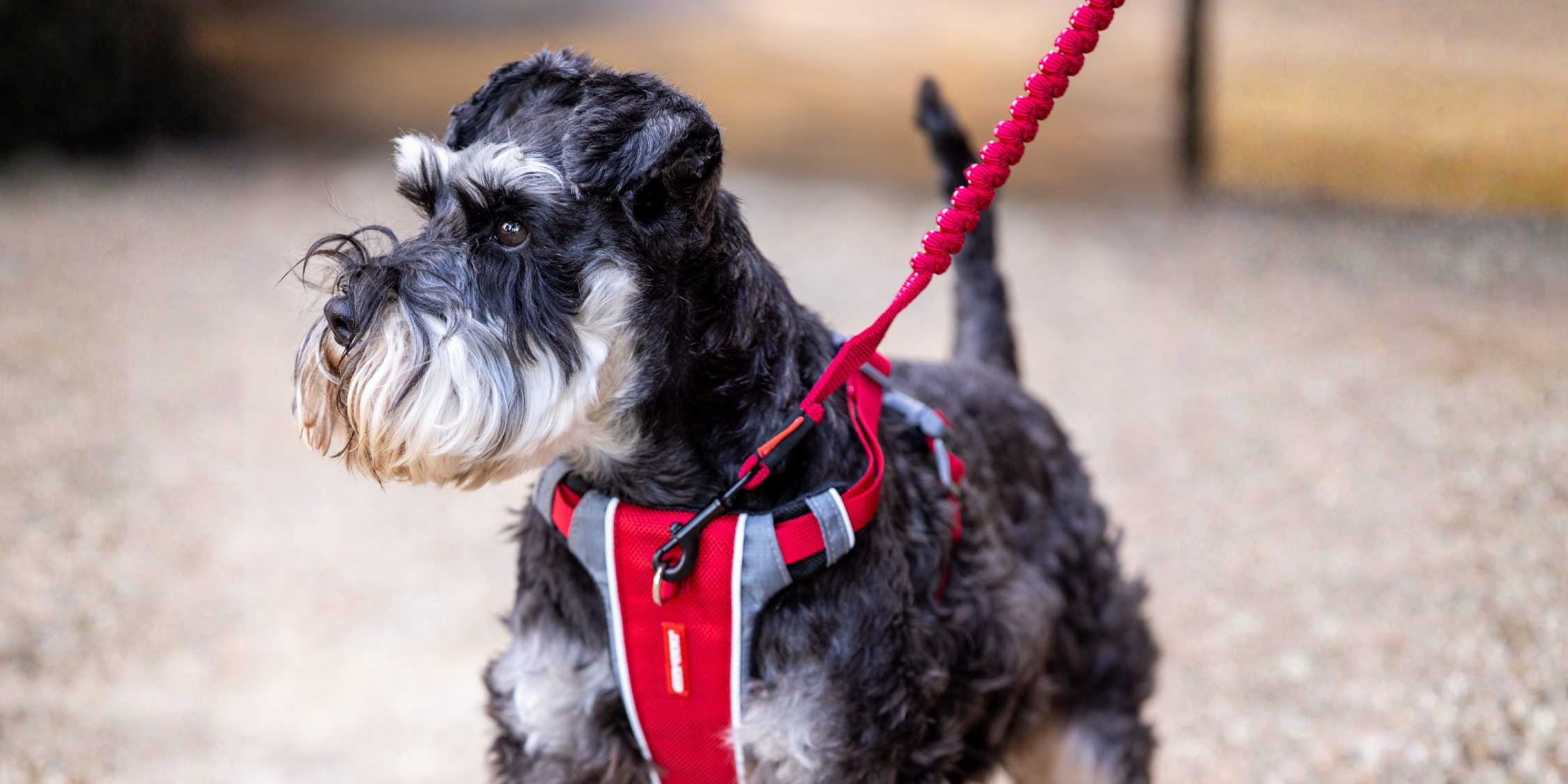
A front clip dog harness, like the X-Link or Express Harness with attachment, has a lead attachment point at the front of the harness, on the dog’s chest.
When your dog pulls forward, the lead connection at the front helps guide their body back towards you rather than letting them pull straight ahead. This does not train your dog by itself, but it gives you better control while you work on loose lead walking.

Front clip harnesses are often used for:
- Dogs that pull on the lead
- Training walks
- Dogs that need chest-level guidance
- Owners who want more control without using neck pressure
- Busy walking areas where direction matters
The main benefit of a front clip harness is control. It helps you redirect your dog more easily when they move ahead.

What is a Back Clip Dog Harness?
A back clip dog harness has the lead attachment point on the dog’s back. It is simple to use, comfortable for most dogs and keeps the lead away from the front legs. For dogs that already walk well, a back clip harness is often a practical daily choice.

Back clip harnesses are often used for:
- Relaxed daily walks
- Dogs that do not pull heavily
- Longer walks where comfort matters
- Dogs that dislike lead pressure near the chest
The main limitation is pulling control. If your dog pulls hard, a back clip may let them lean into the harness and continue moving forward.
Dog Harness Front Clip vs Back Clip: Main Differences
The biggest difference is how each attachment point affects control.
| Harness type | Best for | Main benefit | Limitation |
|---|---|---|---|
| Front clip harness | Pulling, training and guidance | Helps redirect your dog from the chest | May need practice to avoid lead tangling |
| Back clip harness | Relaxed daily walks | Comfortable and simple to use | Less helpful for strong pulling |
| Front and back clip harness | Dogs that need both options | Gives training and everyday walking flexibility | Needs correct fitting and setup |
A front or back clip dog harness is not about one being right for every dog. It depends on your dog’s walking style, training needs and how much control you need.
Is a Front Clip Harness Better for Pulling?
A front clip harness is usually better for dogs that pull because it helps guide the dog from the chest. When the dog moves forward too strongly, the front lead point encourages the body to turn slightly back towards the handler.
This makes it harder for the dog to pull straight ahead with full force.
The benefits of a front clip harness include:
- Better control during pulling
- Less pressure on the neck than a collar
- More guidance around distractions
- Helpful support for loose lead training
- Easier redirection during busy walks
A front clip harness does not automatically stop pulling. Training still matters. However, it gives owners a better tool for managing pulling while teaching calmer walking habits.
If your dog needs more support with pulling, you may want to compare suitable no-pull dog accessories alongside harness fit, lead handling and training consistency.
When is a Back Clip Harness Better?
A back clip harness is better when your dog already walks calmly and does not need extra guidance from the chest.
It is a good option for:
- Relaxed dogs
- Everyday pavement walks
- Park walks
- Longer walks where comfort matters
- Dogs that may find front lead pressure distracting
A back clip keeps the lead above the dog’s body, which some owners find easier for regular walking. It is less suitable if your dog pulls strongly, especially around other dogs, traffic, wildlife or busy paths.
For dogs that do not need extra pulling control, a wider range of dog harnesses may suit everyday walking needs.
Why Choose a Front and Back Clip Dog Harness?
A front and back clip dog harness gives you both options in one design.
This is useful because dogs do not walk the same way in every situation. Your dog may walk calmly on a quiet street but pull near other dogs, open fields or busy paths. Having both attachment points lets you change the setup without changing the harness.
Use the front clip when:
- Your dog is pulling
- You are training loose lead walking
- You need more steering control
- You are walking in busy areas
Use the back clip when:
- Your dog is walking calmly
- You are on a relaxed walk
- You want a simple everyday setup
- Your dog no longer needs extra front guidance
This makes dual-clip harnesses useful for owners who want one harness for both training and daily walking.
When should you use the Front Clip?
Use the front clip when your dog needs help walking beside you.
It is most useful at the start of training or in high-distraction places. For example, if your dog pulls towards other dogs, people, traffic or smells, the front lead point gives you better direction from the chest.
For best results:
- Keep the lead short enough for control, but not tight
- Reward your dog when they walk beside you
- Avoid yanking or dragging
- Check that the harness fits securely
- Practise in quiet areas before busy walks
The aim is not to force your dog into position. The aim is to guide them and reward better walking.
When should you use the Back Clip?
Use the back clip when your dog is walking well and does not need extra guidance.
This setup works well for relaxed daily walks, longer routes and calm dogs that stay close without pulling. It is often the easier choice once your dog has improved their walking behaviour.
- A back clip setup may suit:
- Calm adult dogs
- Dogs with good lead manners
- Longer casual walks
- Low-distraction routes
- Owners who want a simple lead connection
If your dog starts pulling again, switch back to the front clip for more control.
Lead Choice Matters Too
The harness attachment point is only one part of the walking setup. Your lead length, grip and handling style affect control as well.
For pulling control, avoid giving too much lead length in busy areas. A shorter, secure lead gives clearer guidance and helps you keep your dog closer when needed.
For relaxed walks, a comfortable everyday lead may be enough. Browse dog leads if you need a lead to pair with your harness.
Buying Advice: Which Harness Should You Choose?
Choose a front clip harness if your dog pulls, needs training support or becomes difficult to guide around distractions.
Choose a back clip harness if your dog walks calmly and you want a simple everyday option.
Choose a front and back clip dog harness if you want both training support and daily walking comfort in one harness.
For dogs that pull but still need a comfortable everyday walking setup, the X-Link Harness and the Express Harness with the UpFront D-Ring, both give you a front clip dog harness with front and back lead points in one design.
This makes it useful for owners who want chest-level guidance during training and a rear clip option for more relaxed walks.
How to Fit a Front or Back Clip Dog Harness
A harness only works properly when it fits well. If it is too loose, your dog may slip out or move unevenly. If it is too tight, it may rub or restrict natural movement.
Check these fit points:
- The chest piece should sit securely without twisting
- You should be able to fit two fingers under the straps
- The harness should not rub behind the front legs
- The front clip should sit centred on the chest
- The back clip should sit securely along the top of the harness
- Your dog should walk, sit and turn comfortably
For sizing support, use the X-Link Harness Size Guide before choosing a size.
Front Clip vs Back Clip Harness: Quick Answer
A front clip harness is better for pulling control and training because it helps guide your dog from the chest.
A back clip harness is better for relaxed everyday walks when your dog already walks calmly.
A dual-clip harness gives you both options, making it a strong choice for owners who want one dog harness for training and daily walks.
FAQs: Front Clip vs Back Clip Harnesses
Is a front clip harness better?
A front clip harness is better for dogs that pull or need more guidance. It helps redirect your dog from the chest, which gives you more control than a back clip alone.
Does a front clip harness stop pulling?
A front clip harness may help reduce pulling, but it does not stop pulling by itself. It works best when paired with loose lead training and rewards for calm walking.
Should a dog harness clip in front or back?
Use the front clip for pulling control and training. Use the back clip for relaxed daily walks. A dual-clip harness gives you both options.
What are the benefits of a front clip harness?
The main benefits of a front clip harness are better control, easier redirection and less neck pressure compared with walking on a collar.
Are front clip harnesses bad for dogs?
Front clip harnesses are not bad for dogs when they fit correctly and allow natural movement. Avoid poor-fitting harnesses that rub, twist or restrict the shoulders.
Is a front and back clip dog harness worth it?
Yes, a front and back clip dog harness is useful if your dog needs training support on some walks and a relaxed setup on others.
The best option depends on how your dog walks. For dogs that pull, a front clip gives extra guidance and control. For calm everyday walking, a back clip is simple and comfortable. For owners who want both options, a dual-clip harness gives the most flexibility.
Explore the X-Link Harness and the Express Harness with UpFront D-Ring if you want one harness with front and rear lead attachment points for training support and everyday walking.
Gentle Training for Strong Pullers
For dogs that are particularly strong pullers, the Crosscheck Harness offers an added level of control through its figure of eight design and side clip attachment. Unlike a standard harness, the Crosscheck gently tightens when a dog pulls, helping to discourage pulling behaviour while still distributing pressure more evenly across the body than a collar alone. This makes it a popular choice for training, reactive dogs, or owners who need more confidence and control on walks.
The design also helps reduce the risk of dogs backing out of the harness, making it particularly useful for nervous or escape-prone dogs. By combining security, comfort, and responsive control, the Crosscheck Harness is designed to support safer and more manageable walks for both dogs and owners.


Read more
![Dog Beach Safety Tips UK: How to Keep Your Dog Safe at the Beach [UK Guide 2026]](http://ezydog.co.uk/cdn/shop/articles/Blog_headers-9_189b375b-ca36-4aad-bb99-16e35157d41d.png?v=1779102807&width=1200)