Best Orthopedic Dog Beds UK [2026]: Top Picks for Every Breed and Life Stage
Whether your dog is a big sleeper, a busy adventurer who needs to recover after long days out, or a senior who’s started to slow down, an orthopaedic bed is one of the most practical investments you can make in their comfort. Good support isn’t just for later life. It helps dogs of every age rest better, protects growing and active joints, and gives older dogs relief where they need it most.
This guide covers the three EzyDog orthopaedic beds in detail, explains what separates a genuine ortho bed from a standard padded one, and helps you match the right bed to your dog’s size, life stage and sleeping style.
Browse our full EzyDog orthopedic dog bed range to compare all current options.
Quick Summary:
The best orthopedic dog bed in the UK for most dogs is the EzyDog 2-in-1 Ortho Calm Elite. It combines structured orthopedic foam support with a calming bolster surround, making it suitable for dogs at any life stage from active adults to seniors.
For dogs that prefer to stretch flat, the EzyDog Next Gen Ortho Lounger is the stronger choice. All EzyDog beds have machine washable covers, a cooling gel-layer to help with your dog's temperature control, and a water-proof lining to help protect the inner matress.
What Makes a Dog Bed Orthopaedic?
An orthopaedic dog bed is built on a solid, supportive foam core that keeps its shape under your dog’s weight, so pressure is spread more evenly instead of building up on elbows, hips and shoulders. There’s no official standard for the term “orthopaedic”, so it can appear on almost any padded bed.¹ What matters is how the bed is built.
Standard beds filled with hollowfibre or shredded foam tend to shift, clump and flatten with use. A genuine orthopaedic dog bed should feel consistent across the whole surface, even after months of regular use.
Orthopaedic vs memory foam dog beds: what’s the difference?
Memory foam is a material. Orthopaedic describes how a bed is built to support your dog. The best orthopaedic dog beds often use both: a dense support foam base with a memory foam layer on top.
Memory foam (also called viscoelastic foam) softens with body heat and pressure. It moulds to your dog’s shape and helps reduce pressure on bony areas.² On its own, though, memory foam isn’t what holds a dog up. Its quality depends on density and thickness, and lower-density foam is softer and wears out faster.³
That’s why the support layer underneath matters as much as the comfort layer on top, especially in a bed for a large dog.
How to tell if a dog bed is truly orthopaedic
- Press test: push your hand firmly into the bed. If you can feel the floor, it isn’t supportive enough.
- Shape test: if the foam flattens noticeably within a few weeks, it isn’t giving the support the label suggests.
- Check the layers: look for a solid foam core rather than loose fill, ideally with a firmer base under a softer top layer.
Which dogs benefit from an orthopaedic bed?
Every dog benefits from good rest. Adult dogs sleep around 12 to 14 hours a day, and larger breeds can sleep even longer.⁴ An orthopaedic dog bed gives:
- Active dogs a cushioned place to recover after long days out
- Large and heavy breeds support that won’t flatten under their weight
- Older dogs, or dogs with joint conditions such as arthritis, the comfortable, supportive bed in a warm spot that UK vets recommend. Memory foam beds are described as kind to joints.⁵ ⁶
If your dog has a joint condition or is recovering from surgery, ask your vet what they need. A good bed can be one part of that care.
EzyDog Orthopedic Dog Beds: Which One Is Right for Your Dog?
EzyDog makes three orthopedic beds, each designed for a different sleeping style and set of needs. All three are built on a structured foam base and are available through our EzyDog orthopedic dog beds collection.
2-in-1 Ortho Calm Elite
The 2-in-1 Ortho Calm Elite is designed for dogs that like to curl up, rest their chin on a raised edge, or feel more settled with something around them. The bolster surround gives dogs a sense of security while the orthopedic foam base provides the joint support underneath.
The 2-in-1 design means the bolster can be removed depending on how your dog prefers to sleep. The matress is also removeable, so you can transfer it into your car or dog crate easily.

This bed suits dogs at any life stage. Senior dogs often gravitate towards the raised bolster edge for chin resting, and younger dogs with anxiety or restlessness benefit from the enclosed feel.
Best for:
Dogs that curl up, dogs with anxiety and seniors who like a head rest. Owners who want a removable matress for use in the car, whilst travelling or in a crate .
Next Gen Ortho Lounger
The Next Gen Ortho Lounger is an orthopedic, memory foam bed for dogs that prefer to fully stretch out. It is designed like a dog-sofa which means larger breeds, long-bodied dogs such as Greyhounds and Labradors, and dogs that sleep on their sides have full use of the surface.
The memory foam base provides consistent orthopedic support across the entire sleeping area.

If your dog shuffles bolsters out of the way or spills over the edges of enclosed beds, the Lounger is the better fit. It works particularly well for large breeds where a full flat surface makes a bigger practical difference.
Best for:
Dogs that stretch out, large and giant breeds, long-bodied dogs, dogs that dislike enclosed beds, multi-dog households where the dogs like to sleep together.
2-in-1 Ortho Smart Bed
The 2-in-1 Ortho Smart Bed combines orthopedic memory foam support with a practical dual-use design. Like the Calm Elite it offers a 2-in-1 design where the matress is removable, making it a strong option for owners who want orthopedic support that can transfer to the car or crate.
It suits dogs of varying sizes and breeds. It's also the cheapest bed in the range, making it the most affordable choice.

Best for:
Dogs needing ortho support with a handy removable matress, multi-purpose use, owners who want a practical everyday ortho bed that is budget-friendly.
EzyDog Orthopedic Dog Beds Comparison
| Best for | 2-in-1 Ortho Calm Elite | Next Gen Ortho Lounger | 2-in-1 Ortho Smart Bed |
|---|---|---|---|
| Best sleeping style | Curling up, chin-resting | Stretching out | Mixed, flexible |
| Bolster surround | Yes, repositionable and removeable | No, raised edges like a sofa | Yes, not removeable |
| Best life stage | All stages, especially seniors | Adults and large breeds | All stages |
| Ideal for anxiety | Yes | No | Yes |
| Best for large breeds | Medium to large | Large and giant | Medium to large |
| Orthopedic memory foam base | Yes | Yes | Yes |
| Removeable matress | Yes | No | Yes |
| Cooling gel layer | Yes | Yes | Yes |
| Machine washable covers + waterproof lining | Yes | Yes | Yes |
| Personalisable name label (sold separately) | Yes | Yes | Yes |
Are Orthopaedic Dog Beds Worth It for Healthy Dogs?
Yes. Orthopaedic beds aren’t just for older dogs. Dogs spend around half the day asleep and much of the rest lying down,¹ so the surface they rest on matters at every age. A supportive foam base spreads your dog’s weight more evenly than a standard filled bed, so less pressure builds up on elbows, hips and shoulders while they rest.
Standard beds filled with hollow fibre or loose foam often flatten within months of regular use. Once the filling has compressed, your dog can end up feeling the hard floor through the bed. An orthopaedic bed with a solid foam core keeps its shape and support for much longer, so it’s better value over time.
That difference is most noticeable for larger breeds, which put more weight on the bed, and for active dogs who need a comfortable place to rest after long days out.
For older dogs, or dogs with aches, pains or joint problems, an orthopaedic or memory foam bed is particularly worth considering, and it’s what the RSPCA suggests.² A firm, supportive surface gives a stable base to lie down on and push up from, rather than a soft bed they sink into.
Look for one that’s easy to step in and out of. If your dog has a joint condition, your vet can advise on what will help them most.
How to Choose the Right Size Orthopaedic Bed
Your dog’s bed should be big enough for them to lie comfortably in all their natural positions, including fully stretched out with their legs extended.² A dog who can’t stretch out properly won’t get the full benefit of the support.
To find the right size:
- Measure length: with your dog lying stretched out, measure from the tip of their nose to the base of their tail.
- Add space: add 15 to 30 cm. Use the lower end for dogs who curl up and the higher end for dogs who sprawl.
- Check the width: make sure there’s room for their legs when they lie on their side.
- Compare: check your measurement against the EzyDog size guide.
If you’re between sizes, choose the larger one. A bed that’s slightly too big is better than one that’s too small.
Buying for a puppy? Puppies grow quickly, and some like to chew, so there’s a choice to make. You can buy a bed that fits them now and upgrade once they reach adult size, or choose their adult size from the start so it lasts.
For large and giant breeds especially, check the expected adult size for the breed before you decide. Visit the EzyDog orthopedic dog beds collection to check current sizing details for each bed.
Orthopedic Dog Beds and Life Stage: Matching the Right Bed to Your Dog’s Age
Puppies and young dogs
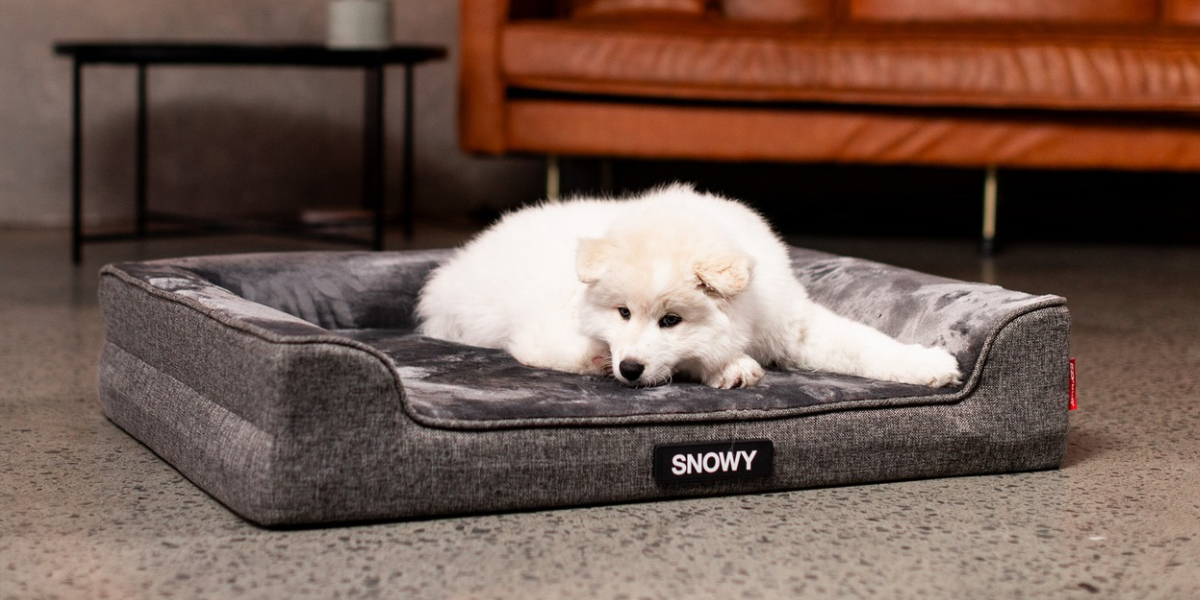
Puppies spend much of the day asleep, so a comfortable, supportive bed gives them a good place to rest while they grow. At this age, comfort and security matter as much as support. Many puppies settle best with something to snuggle against, which is why a bolster bed such as the Calm Elite works well for young dogs who like an enclosed sleeping space.
If you have a large or giant breed puppy, choose a bed with room to grow, or plan to size up as they reach their adult size.
Active adult dogs
It’s easy to assume active adult dogs don’t need an orthopaedic bed. But a dog who runs, jumps and swims every day needs a proper place to rest and recharge afterwards. An orthopaedic bed gives them a supportive foam base that won’t flatten after months of heavy use, so they get the same comfortable rest after every adventure.
For larger, heavier breeds, a bed that keeps its shape makes the biggest difference.
Senior dogs
Older dogs typically benefit most from an orthopaedic bed. Stiffness after rest is common in later life, and many older dogs develop arthritis, including arthritis that develops from hip dysplasia. Older dogs or dogs with aches, pains or joint problems may benefit from an orthopaedic or memory foam bed.¹
A bed that stays firm and supportive through the night gives them a stable surface to lie down on and push up from, rather than one they sink into. The raised bolster edge of the Calm Elite gives senior dogs a comfortable chin rest and helps them feel settled overnight. If your dog has a joint condition, ask your vet what will help them most.
What to Look for When Buying an Orthopaedic Dog Bed in the UK
Check these five things before you buy.
1. Foam quality
Look for a solid, supportive foam base rather than loose filling such as hollowfibre or shredded foam. Memory foam moulds to your dog’s shape and helps spread their weight, but it should still keep its shape under them and not flatten or bottom out over time.
2. A washable cover and waterproof lining
A removable, machine-washable cover is essential. Dog beds collect hair, dander and dirt quickly, and a cover that can’t be washed is much harder to keep fresh. A waterproof lining is just as useful for wet walks, muddy paws and the occasional accident, because it protects the foam inside.
Every EzyDog orthopaedic bed has a removable cover that unzips for washing at 30°C, plus a waterproof lining.
3. A non-slip base
A bed that slides across the floor is harder for dogs to use confidently, especially older dogs or dogs with stiff joints. A non-slip base keeps the bed in place, giving your dog a steady surface to lie down on and get up from.
4. The right size for your dog
Breed guides are a useful starting point, but dogs of the same breed can vary a lot in size. Measure your own dog lying fully stretched out, add roughly 15 to 20 cm, and choose the size that matches the measurement, not the breed. If your dog falls between sizes, choose the larger one.
5. Easy access
If your dog is stiff or less mobile, check how easily they can step on and off the bed. Very high bolsters all the way around can be hard to climb over. The Next Gen Lounger has an open front and a firm headrest bolster, so it suits dogs who like to stretch out.
The Calm Elite and Smart beds are 2-in-1 designs: the mattress lifts out, so you can use it flat on its own when your dog needs easier access.
Frequently Asked Questions: Orthopaedic Dog Beds
What is the best orthopaedic dog bed in the UK?
The best orthopaedic dog bed depends on your dog’s size, age and sleeping style. Across the EzyDog range:
- Dogs who like to curl up or feel secure: the Calm Elite Orthopaedic 2-in-1 combines memory foam with a cosy bolster surround. The mattress also lifts out to use flat.
- Dogs who stretch out, and large or older dogs: the Next Gen Orthopaedic Lounger has an open front, the thickest mattress in the range and a firm headrest bolster.
- One bed for home, crate and car: the Smart Orthopaedic 2-in-1 has a removable mattress that doubles as a travel bed, and it’s the entry-level price in the range.
Are orthopaedic dog beds worth it?
Yes, for dogs at any life stage. Adult dogs spend around half the day asleep and much of the rest lying down, so what they rest on matters. A supportive foam bed spreads their weight more evenly and keeps its shape for longer than a standard filled bed. It’s particularly worth considering for older dogs, larger breeds and dogs with aches or joint problems.
What do vets recommend for dog beds?
UK vet charities and vet practices recommend a comfortable, well-padded bed in a warm, draught-free spot that your dog can get in and out of easily. For older dogs or dogs with joint problems, they suggest orthopaedic or memory foam beds, and the PDSA describes memory foam beds as kind to joints.
The PDSA also suggests giving your dog a choice of beds, so they can either snuggle in an enclosed bed or stretch out on a flat mattress.
How do I know if my dog needs an orthopaedic bed?
Any dog can enjoy the comfort of an orthopaedic bed, and older dogs, large breeds and very active dogs often get the most from one. If you notice stiffness after rest, difficulty getting up, limping or reluctance to lie down, speak to your vet first, because these can be signs of pain or arthritis.
Your vet can advise on care, and a supportive bed can be one part of keeping your dog comfortable.
Can puppies use orthopaedic dog beds?
Yes. A comfortable, supportive bed gives puppies a good place to rest while they grow, and many puppies settle best in a bed with bolsters to snuggle against. Puppies grow quickly, so you can either buy a size that fits them now and upgrade later, or choose their adult size from the start.
For large and giant breeds, check the expected adult size before you decide.
How long do orthopaedic dog beds last?
A good orthopaedic bed with a solid foam core should keep its support much longer than a bed filled with hollowfibre or shredded foam, which can compress within months of regular use.
Check the foam from time to time. If it stays flattened under your dog’s weight or doesn’t spring back, it’s time to replace it. Every EzyDog bed comes with a 1-year warranty against manufacturing defects.
Final Thoughts
The right orthopaedic bed makes a real difference to how comfortably your dog rests, whatever their age or size. Browse the full range of EzyDog orthopaedic dog beds to compare the Calm Elite, Next Gen Lounger and Smart bed side by side, and find the right fit for your dog’s size, sleeping style and life stage.


Read more