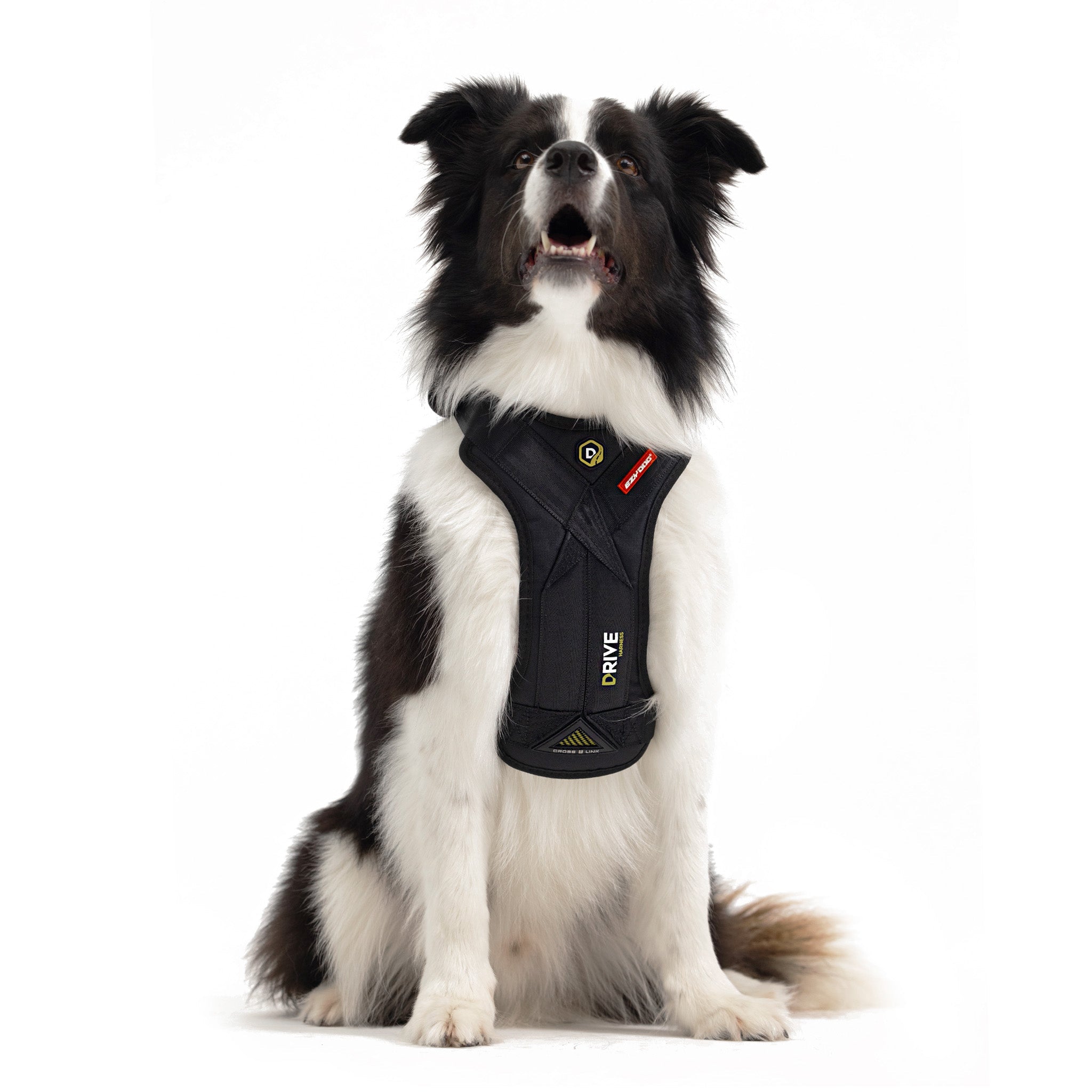
Drive Car Harness
WHAT OUR CUSTOMERS SAY
See what real life customers and their pets have to say about us.
Why Choose EzyDog Dog Car Harnesses?
Frequently Asked Questions
What makes a dog harness 'Crash Tested'?
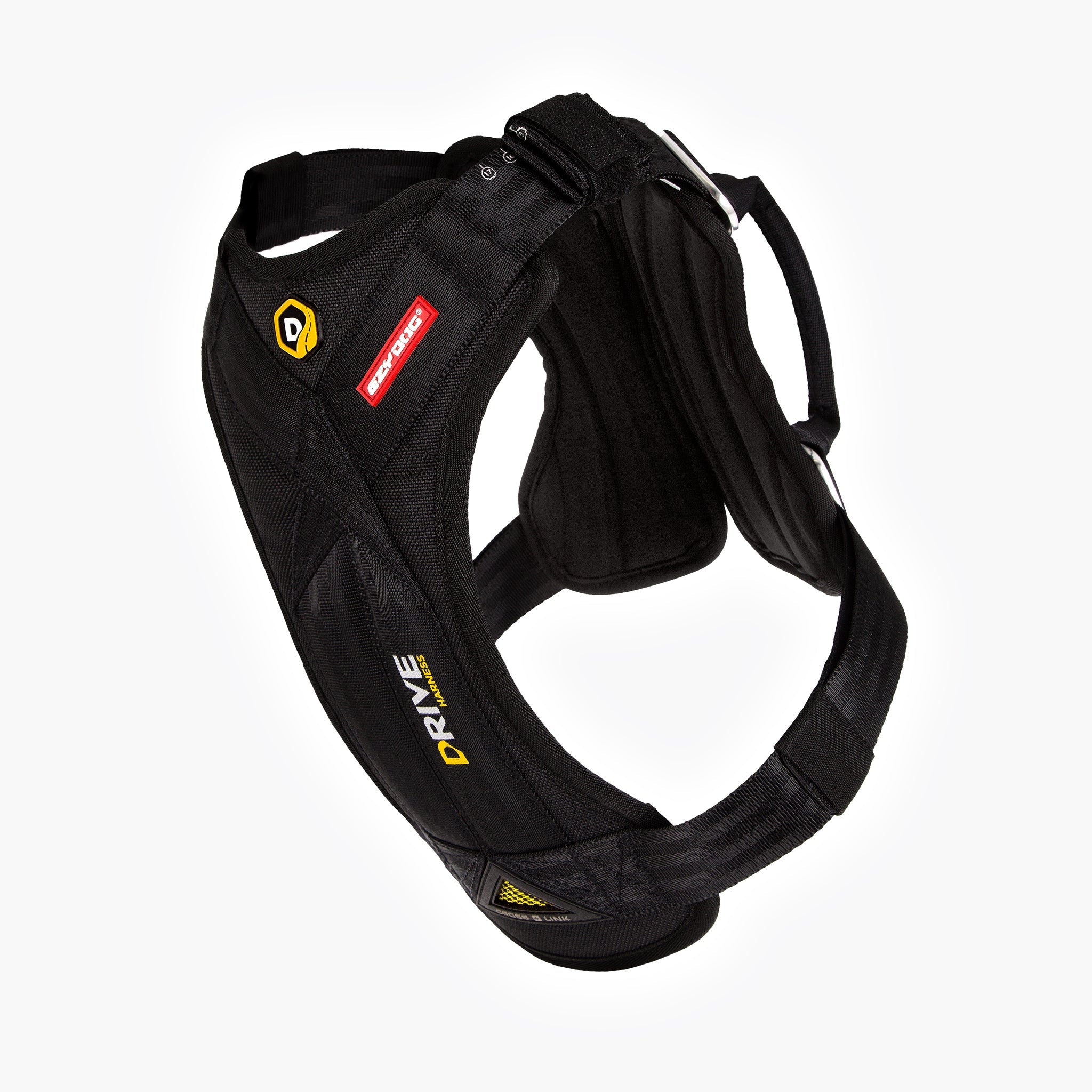
A crash-tested dog harness has been subjected to simulated collision tests (sled tests) to verify it can withstand the forces of a crash without breaking. Our Drive Harness is certified to UN Regulation ECE R16, the global standard for vehicle safety belts.
Is it illegal to drive with an unrestrained dog in the UK?
Yes. While there isn't a specific 'dog seat belt' statute, Rule 57 of the Highway Code requires dogs to be restrained. Driving with a loose dog can lead to a charge of 'Careless Driving', a fine of up to £5,000, and invalidated insurance.
Can I use a regular walking harness in the car?
We do not recommend it. Standard walking harnesses are not built to withstand the high-impact forces of a collision. For travel, always use a dedicated safety harness or a heavy-duty restraint designed for vehicle use.
How do I attach the harness to the car?
Once the harness is fitted to your dog, you can attach it to the car using the vehicle's existing seatbelt fed through the harness handles, or by using a Click Dog Seat Belt attached to the harness D-ring.
How do I measure my dog for a car harness?
Fit is critical for safety. Measure the girth (widest part of the chest) and neck circumference. Since car harnesses need to be snug to work effectively, always refer to our specific Drive Harness Size Guide before purchasing.
Can my dog sit in the front seat with a harness?
Yes, but you must switch off the passenger airbag. The force of an airbag deploying can be fatal to a dog. We strongly recommend securing your dog in the back seat for maximum safety.
Is the Drive Harness suitable for puppy training?
The Drive Harness is heavy-duty and might be too bulky for very small puppies. For young dogs, we recommend using a puppy car restraint attached to their walking harness until they are large enough for the adult Drive Harness.
How tight should a dog car harness be?
A dog car harness should be snug enough that you can fit two fingers flat between the harness and your dog, and no looser. A loose harness lets your dog move in a collision, which defeats the safety benefit. Check the fit every journey, as harnesses can loosen with movement.
How do I know if my dog's car harness is fitted correctly?
A correctly fitted car harness sits flat against the chest with no twisting, the chest plate covers the breastbone, and you can slide two fingers under any strap but no more. If your dog can back out of it or slip a leg free, it is too loose and needs adjusting before you drive.
What is the difference between a dog seat belt and a crash-tested harness?
A dog seat belt is the tether that connects your dog to the car's anchor points, while a crash-tested harness is the harness your dog wears, tested to withstand collision forces. You need both: the crash-tested Drive Harness on your dog, connected by a seat belt attachment.
Do EzyDog Dog Car Harnesses come with a warranty?
Yes, our EzyDog Dog Car Harness come with a 1-year warranty, ensuring that your products are made to last, and giving you peace of mind with every purchase.