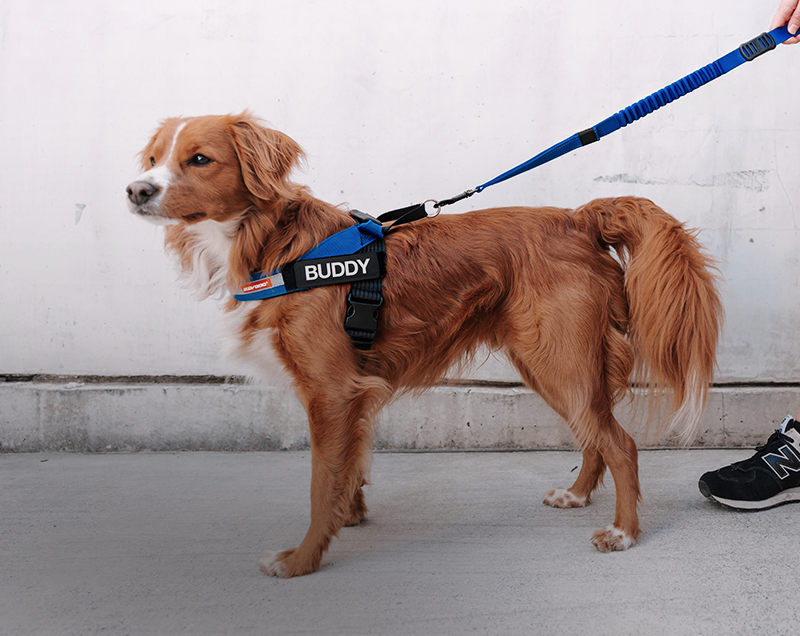
How to Put On a Dog Harness: Our Step-by-Step Guide
Dog harnesses are essential for safe, comfortable, and enjoyable walks — but if you’ve ever fumbled with straps or struggled to work out which loop goes where, you’re not alone. In this guide, we’ll walk you through how to put on a dog harness step-by-step, helping you to avoid common mistakes, and ensure a perfect fit every time.
Before you begin, it is important to ensure you have the right style for your dog's temperament and activity level. You can explore our wider dog harness collection to find the perfect fit for the upcoming Spring trails.
Understanding how to put on a dog harness correctly ensures your pet is comfortable and that the safety features, such as reflective stitching and reinforced D-rings, work exactly as intended.

Step-by-Step: How to Put On a Dog Harness
Understanding how to put on a dog harness can feel confusing, especially with so many styles available. But once you know the steps, it becomes second nature. Here's a detailed guide that applies broadly across most common harness types, including step-in and over-the-head models.
Step 1: Identify Your Harness Style
Start by checking which type of harness you are using as the fitting method varies between designs:
Step-In Harnesses:
These are ideal for dogs that dislike equipment going over their heads. The FormFit Mesh Harness is our bestselling breathable option for smaller breeds.
Over-the-Head Harnesses:
This is the most common style and is usually very straightforward to fasten once the neck loop is in place.
Car Safety Harnesses:
These are designed specifically for travel with extra padding and reinforced points. You can view our full range of dog car harnesses, including the crash-tested Drive Car Harness, for your Easter road trips.
Each harness style may require a slightly different fitting method, so familiarising yourself with the product design is essential before you begin.

Step 2: Prepare the Harness and Your Dog
Before placing the harness on your dog, loosen all adjustable straps. This makes it easier to position and reduces initial resistance from the dog. Lay the harness flat and identify each part — neck loop, chest strap, belly band, and D-ring. If you're attatching a dog tag to your harness, now is a good time to do it.
Let your dog sniff and inspect the harness to become familiar with it. Associating the gear with treats or play can make the process smoother, especially for nervous or small dogs. If you are still deciding between a harness vs collar for your daily walks, remember that a harness provides far superior support for active dogs.
Step 3: Position the Harness Correctly
For Step-In Types:
Lay the harness flat on the ground and gently guide your dog’s front paws into the appropriate loops. Pull the straps up and around the body.
For Over-the-Head Types:
Slip the neck loop gently over your dog’s head. Then guide the chest strap underneath and around your dog’s body, ensuring the webbing is not twisted. Check that the D-ring is positioned correctly, usually on the back for standard use or on the chest for no-pull control.
Check that the D-ring is positioned correctly — on the back for standard use or on the chest for no-pull control.
Step 4: Fasten and Secure
Once positioned correctly, bring the straps around your dog’s chest and fasten the side clips. Ensure that the clips snap securely into place and that no straps are tangled or pinched.

Step 5: Adjust for Comfort and Safety
Adjust the straps so that the harness fits snugly. You should be able to slide two fingers between the harness webbing and your dog’s body. The fit should be firm but not restrictive to allow for full shoulder mobility.
For detailed measurement advice, you can consult our harness size guide.
Common Mistakes to Avoid
Even the best harness won’t function properly if used incorrectly. Here are some mistakes to steer clear of:
1. Using the wrong size
A loose harness may allow your dog to wriggle free, while one that’s too tight could cause discomfort. Always measure before buying.
2. Skipping adjustment
Out-of-the-box fits are rarely perfect. Adjust each strap before every walk.
3. Twisted straps
Ensure the harness is flat against your dog’s body to avoid rubbing.
4. Wrong D-ring usage
Some harnesses have both front and back rings. Use the correct one based on your walking style.
Tips for Small or Nervous Dogs
If your dog is small, timid, or particularly sensitive, make harnessing a positive and calm experience:
-
Choose a harness style that doesn’t go over the head, like a Step-in Harness.
-
Let them sniff and explore the harness before putting it on.
-
Reward calm behaviour with treats and praise during and after harnessing.
You can also explore our Small Dog Harnesses for a more tailored fit.
How to Fit Specific EzyDog Harnesses
Each EzyDog harness is designed for ease and comfort, but the fitting method may vary slightly. Here's how to put on each of our most popular harness styles:
The EzyDog Crosscheck Harness
The Crosscheck Harness is ideal for dogs who pull or are undergoing training. It wraps around the chest and under the belly, using a loop-locking system to discourage pulling.
EzyDog No-pull Cross Check Harness fitting instructions:

Shop the Crosscheck Harness – ideal for training and pull control
The EzyDog Chest Plate Harness
Designed to distribute weight across the chest evenly. Place the harness over the head, wrap the strap behind the legs, and secure it. The chest plate should sit flat across the front.
EzyDog Chest Plate Harness fitting instructions:

Shop the EzyDog Essential Chest Plate Harness
The EzyDog X-Link Harness
The X-Link features both front and back D-ring options. Start by placing it over the head, fasten the belly strap, and choose your clip placement depending on your walk.
EzyDog X-Link Harness fitting instructions:

Shop the EzyDog X-Link Harness
The EzyDog Convert Harness
Designed for larger breeds, this harness includes a padded chest panel, grab handle, and optional accessories. Lay it over the back, wrap the chest strap underneath, then fasten securely.
EzyDog Convert Harness fitting instructions:

Shop the EzyDog Convert Harness
The EzyDog Express Harness
A minimalist design with maximum function. Slide over the head, fasten the chest strap, and adjust using the side buckle. Includes a grab handle for quick control.

EzyDog Express Harness fitting instructions:

Shop the EzyDog Express Harness
The EzyDog Quick Fit Harness
As easy to use as a collar. Slide over the head, clip under the chest, and adjust one strap to fit. Perfect for dogs on the go.
EzyDog Quick Fit Harness fitting instruction diagram:

Shop the EzyDog Quick Fit Harness
The EzyDog Drive Car Harness
For dogs over 7kg, this harness is built for vehicle restraint. Thread the seatbelt through the harness handles and fasten. Adjust fit for secure and comfortable travel.
EzyDog Drive Car Harness Fitting instructions:

Shop the EzyDog Drive Car Harness
Discover the NEW EzyDog FORMFIT ® Mesh Harness
The FORMFIT® Mesh Harness is an adjustable, lightweight harness that ensures comfort with breathable mesh fabric, perfect for smaller active dogs up to 14.5kg.

Frequently Asked Questions: Harness Fitting
Why does my dog's harness keep slipping to the side?
Slipping usually indicates that the harness is too loose or that the side straps are adjusted unevenly. Re-tighten the straps using the two-finger rule and ensure the chest plate is perfectly centered on your dog's breastbone.
What is the biggest objection to using a harness?
Many owners worry that a harness is too complicated to put on. However, by choosing a step-in harness, you remove the "puzzle" aspect. These designs are often as fast to secure as a standard collar but offer much better safety for the dog's neck.
Can my dog wear a harness for a whole Spring road trip?
While our harnesses are padded for comfort, we recommend removing them during long breaks to allow the skin to breathe. For travel safety, always ensure the harness is a crash tested dog harness to provide genuine protection in an accident.
Is it harder to put a harness on a puppy?
It can be if the puppy is excited. We recommend using a lightweight harness for dogs that features a single-buckle system to make the process as quick as possible while they are still learning to stand still.
For more details, refer to Lightweight and Breathable Dog Harness Guide for UK Spring.
Final Thoughts: The Start of Stress-Free Walks
Putting on a dog harness doesn’t need to be a daily struggle. With the right design, proper fit, and a calm approach, your dog will be geared up and ready for walkies in no time.
Ready to try it yourself? Shop our full range of dog harnesses to find the perfect fit for your pup.


Read more